
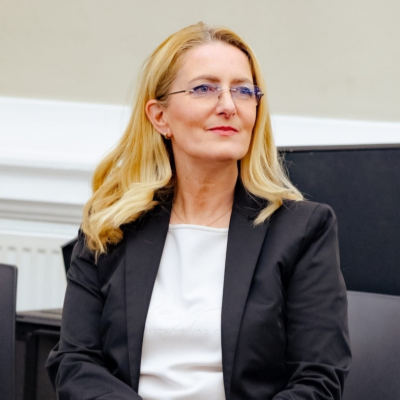
Georgeta Grama-Moldovan
“The future of our societies will be human-centered, or it will not exist at all.”
Georgeta Grama-Moldovan is an international relations consultant and sociologist, specializing in geopolitics, governance, and sustainability, with a particular focus on reducing food waste and supporting the transition from linear to circular economic models in Eastern Europe.
She currently serves as Director General of the Global Europe Anticipation Bulletin (GEAB), a multilingual monthly publication by Anticipolis Editions (France), dedicated to analyzing global geopolitical and societal transformations. She is also a board member of the Laboratoire Européen d’Anticipation Politique (LEAP2040 – Paris) and the Cluj International Committee.
Her work lies at the intersection of governance and systemic transformation, drawing on over two decades of experience in European networks and the public policy environment.
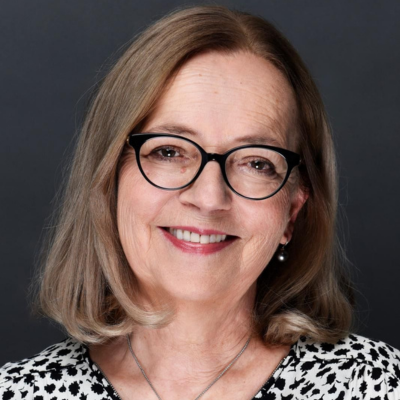
Delia Bugarin-Lupu
Delia Bugarin-Lupu is a violinist and the president of the Radu Lupu Foundation, created in 2024 in memory of her husband, pianist Radu Lupu.
The foundation, based in Switzerland, identifies and promotes young musical talents, supporting them in their professional development and achievement.
At the same time, the Radu Lupu Foundation organizes and provides human and financial support to special cultural events, thus providing a launch platform and visibility for tomorrow's generations.
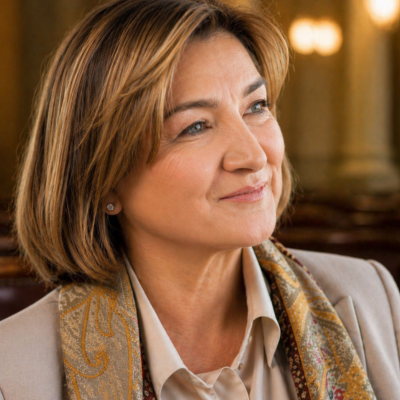
Catia Rădulescu
After many years practicing law, Catia Rădulescu became Managing Partner of a major group with diverse business interests, building a rich and dynamic professional career. Her passion for art, especially music, has accompanied her since childhood, inspired by her father and guided by her violin teacher, who also became a mentor in life.
“Excellence in art is extremely difficult to achieve; the effort is immense, and without genius, one cannot reach the world’s great stages. A more accessible path, yet one of immense fulfillment, has been the role of patron, striving over time to support both established artists and emerging talents, whether musicians, painters, or writers. For this reason, being close to the Humans Festival and its founder, the renowned violinist David Grimal, so generous with young artists, is both a joy and a privilege.”
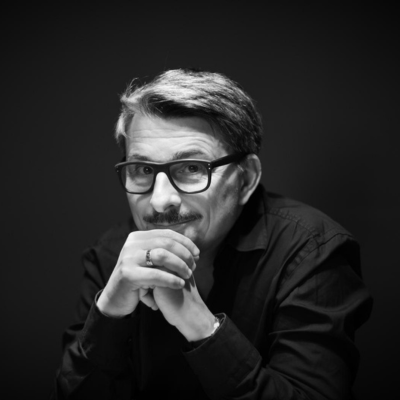
Laurent Joyeux
I am very happy to support this new festival founded by David Grimal, because I strongly believe that music, an expression of the human soul, so personal and intimate, can heal the wounds of our fragmented societies, or at least help us overcome them, bringing us together again. I am convinced that this festival carries this ambition.
Former general and artistic director of the Dijon Opera for 15 years, Laurent Joyeux has been, since 2023, the Artistic Director of the Auditorium – National Orchestra of Lyon.
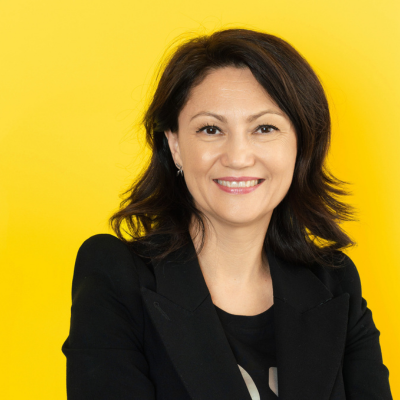
Carmen Uscatu
Carmen Uscatu has dedicated her entire life and professional path to ensuring that patients in Romania have access to the highest standards of medical care, grounded in dignity and respect.
In 2024, she expressed this experience in her autobiography, The Year I Didn’t Die, a deeply moving testimony of her journey through the Romanian healthcare system—first as a patient on the brink of death, and later as one of the key figures behind the movement that succeeded in building the first children’s hospital fully funded through donations and sponsorships.
Today, she continues her work with the same unwavering commitment, both nationally and internationally, advocating for equal access to treatment for children battling cancer and for truly world-class medical care.
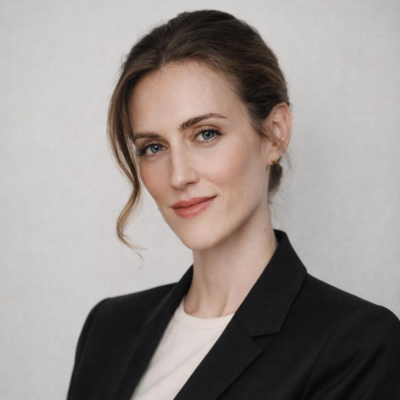
Charleyne Biondi
Charleyne Biondi is Vice President, leading research on emerging technologies at Moody’s, and Senior Research Fellow on digital issues at the Institut Montaigne in Paris. She holds a PhD in political theory from Columbia University and is the author of an essay exploring the philosophical and political implications of digital technologies.
Her work focuses on the philosophy of technology, the cultural history of the digital age, and the geopolitics of transformations driven by artificial intelligence.
Deeply connected to classical music, she sees it as a privileged space for questioning what, within human experience, resists simulation.